

A couple of weeks ago I was in Malta for the British Guild of Travel Writers’ AGM. I was curious to see how the islands had evolved since my last visit and so stayed on for a few days as a guest of the Malta Tourist Board.

In the past it’s fair to say that Malta had a reputation as a long-stay destination for elderly British package tourists, those whose experiences of wartime or of National Service had acquainted them with the islands. Many chose to escape the claustrophobia of dark, wet and cold UK winters. Who could blame them? Inevitably the wartime demographic has thinned. Malta’s history hasn’t been forgotten but remembrance of WW2 has moved on from first-person to third person past tense. The experience of others has laid down another layer in the islands’ turbulent strata. These days Malta, though rich in history, seems younger.
In Valletta, April days were mostly warm and sunny, hovering around 19 degrees. Republic Street’s café tables were filled from mid-morning by Maltese and foreign cappuccino habitues. I heard Italian significantly more than during previous visits. In some places it was the primary language. There were also fewer ‘Full English’ signs and more restaurants citing culinary provenance in Sicily and Naples. Progress? Probably. For me the city felt more European, but my perspective may be warped by Britain’s own ill-conceived lurch to sovereign insignificance.
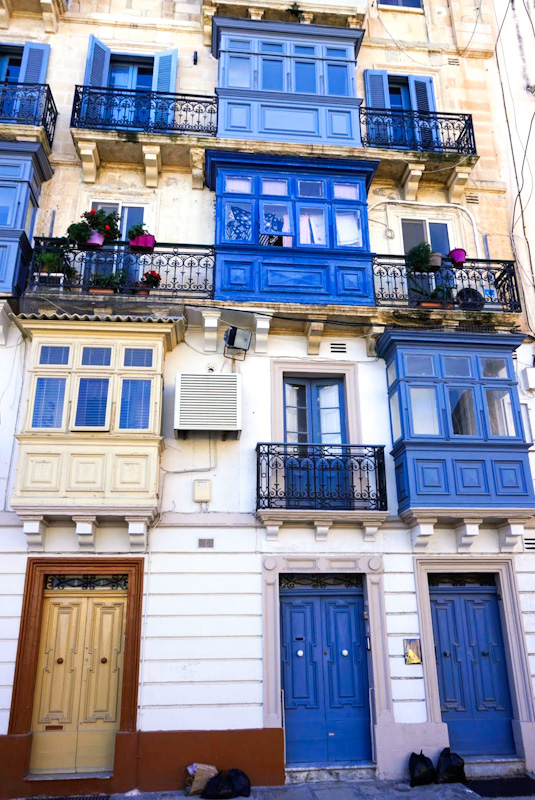
Along Strait Street, once much favoured by lonely British naval ratings in search of no-strings company, times had changed. Following British military withdrawal in 1979 ‘The Gut’, as it was known, became deserted. Faded signage on empty, shuttered bars described a crushing hangover following raucous years of febrile indiscretion. This time there was new life. Small fashionable cafes, and a few bars and restaurants had opened, some trading on an edgy, alternative past. There was even a five star hotel.

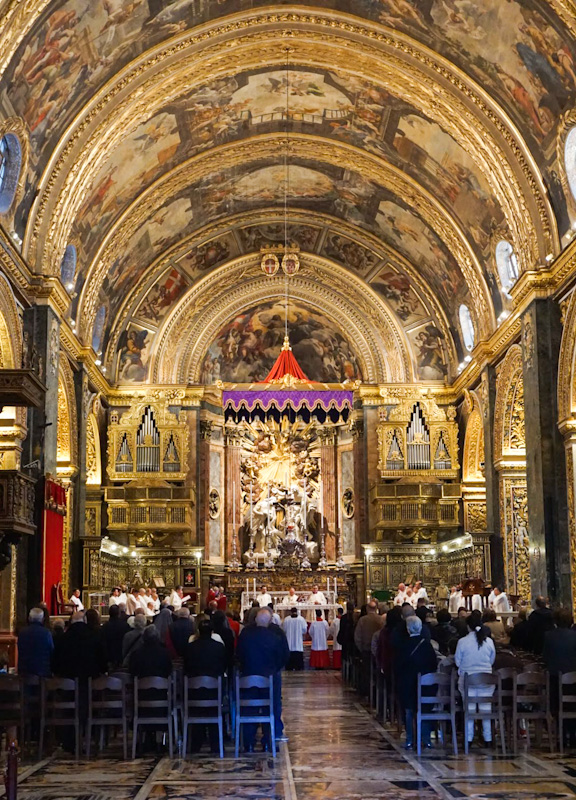
Elsewhere, Valletta still rendered a concentrated blast of the Baroque, in both architecture and art. There are plenty of examples but nowhere exemplifies this more than St Johns Co-Cathedral. I’m not usually overwhelmed by gilded churches but I’ll make an exception for St John’s. If you’re in town do visit. Icing on the cathedral’s already ornate cake is by way of two Caravaggios. They are are spine tingling.
In a manifestation of continental Catholicism, God still goes on parade in Malta. On the Feast of St Joseph teams of sweaty priests hauled hefty gilded statuary around Valletta’s main streets relentlessly pursued by brass marching bands. Similar processions took place in other towns across the islands. Despite the late Dom Mintoff’s efforts, during his terms as Prime Minister, to wrest power from the priests, the church’s writ remains large.

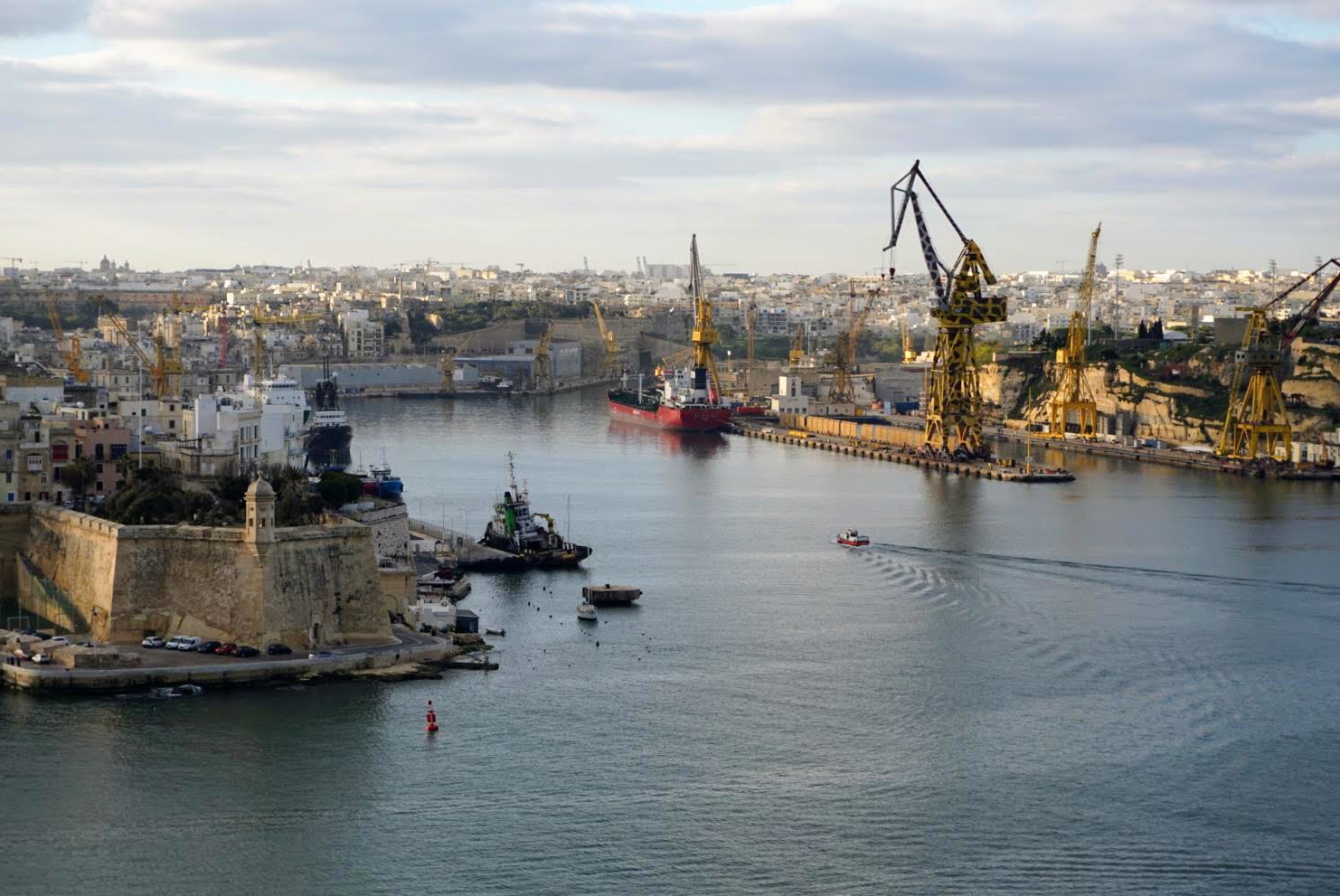
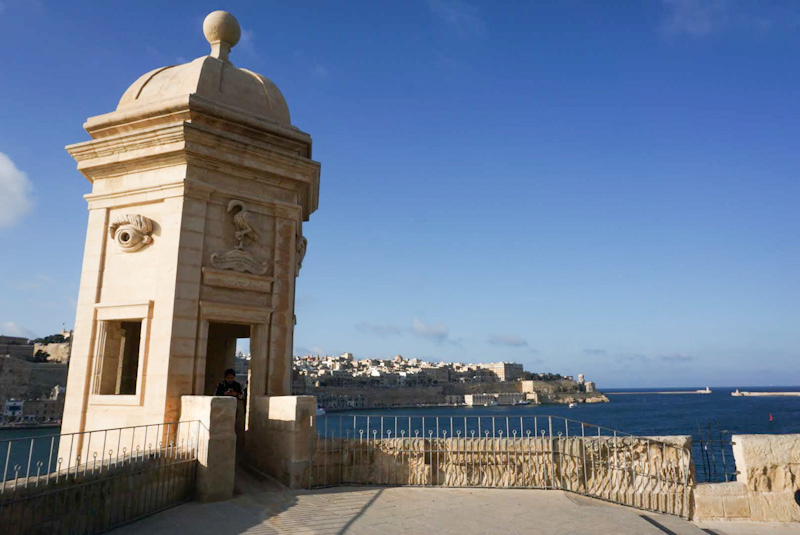
Views from Barrakka Gardens across the Grand Harbour are remarkable as ever. The Three Cities, Birgu (Vittoriosa), Cospicua and Senglea, lie a 2 Euro dghajsa ferryboat ride across the harbour from Valletta – surely one the best bargain in Malta. Intestinal backstreets here recall an older Malta, even before the Great Siege of 1565, while bullet-strafed bastions bring us right up-to-date and WW2 battles. Time spent exploring is akin to wandering a living open-air museum. And there’s always a cold Cisk beer waiting at one of the bars overlooking millions of Dollars of fibre glass moored in the yacht marina.
A ferry to Gozo takes 20 minutes, just time for a coffee. Quieter, less populated, around 40,000 people, and more conservative. In Gozo everyone knows everyone else. Gozitan life centres around the church and an endless litany of Catholic festivals. I think I’d run a mile… Across the island churches are are at the heart of every village. In the island’s landscape they’re almost always the tallest, most prominent structures. Directions are given by churches. It’s pubs in the UK. For me too much religion and too little privacy is a deal breaker. However, a gentle pace of life and supportive communities have their merits. Across Gozo life is suffused by an atmosphere of calm.

Spirituality is in Maltese blood. Pre-historic temples of Ggantija on Gozo and Hagar Qim on Malta date from 3,600 BC, some of the world’s oldest freestanding structures. I visited both megalithic ruins for the first time and although I’ve seen more obviously impressive ancient sites, there are subtle details that make these sites extraordinary. That both temples predate Stonehenge and the Giza pyramids, a time before the adoption of the wheel let alone metal tools, is also something worthy of contemplation.

Despite Italy’s proximity – Sicily is only 90 minutes by fast ferry – Britain is still preeminent in terms of tourism. Those arriving on the islands now are younger, possibly more adventurous and in some cases wealthier. Activities have evolved to cater to this market, including horse-riding, off-road Segway tours, self-drive electric car hire along tiny backstreets, gourmet and wine trails, and hiking tours.
Malta’s economy has changed. Though tourism was badly affected by COVID, the industry has bounced back, not all the way, but almost. Over the years Malta’s service sector has grown too, now around 35% of GDP. Less attractive opportunities too have been exploited.
The gambling sector in particular has made visible inroads. Casinos have opened, and companies offering online opportunities to win or lose a fortune have made Malta their headquarters. It’s a business elsewhere shown to cross the line, morally and legally. The fallout from 2017’s murder of well-known journalist Daphne Caruana Galizia, while she was investigating unexplained links between the gambling industry and ministers in the Maltese government, shocked the island and undermined its democratic foundation. Though then Prime Minister Joseph Muscat resigned, and arrests were made, most in Malta believe justice has yet to be served.

Questionable big business activities notwithstanding, more broadly there’s an increased affluence in Malta. Across the islands, investment in education is a priority – Malta’s population is recognised as its most valuable resource. A small nation of half a million people, a colonial appendage for decades, has transformed from a low-wage unskilled base to become an advanced, high income country as defined by the IMF. Would I recommend a trip to Malta? Yes. Most certainly.
Do feel free to ask any questions using the form below this piece. I’ll try and answer, and if I don’t know I’ll say so.
More: Maltese Tourist Board visitmalta.com
Fly:
Air Malta Flights from London (LHR and LGW) to Valletta from around £125 return.
Read: Malta & Gozo (Bradt 2019)
Stay:
Radisson Blu St Julian’s A comfortable 5-star base on the seafront in St Julian’s. Good bistro restaurant and bar. Rooms from £108/night B&B. Number 14 bus stops nearby and heads towards Valletta
The Phoenicia The grand dame of Maltese hospitality, a 5-star hotel in Floriana, walking distance from Valletta. A favourite of Queen Elizabeth II. Rooms from £285/night B&B
Eat:
Don Berto An accomplished restaurant overlooking the marina on the waterfront in Birgu (Vittoriosa). Maltese and Mediterranean cuisine, including pizza. I ate possibly the best Sea Bass ever here, during a fantastic lunch. Recommended.
Madleina Lodge Lovely restaurant occupying a former British military building not far from St Julian’s. Maltese dishes and Mediterranean. Dinner from £35pp
Do:
Rolling Geeks Self-drive electric buggy tours. Various routes from a base in Birgu (Vittoriosa), Malta. The most fun you can have at 15mph. From £66.
Gozo Picnic (gozopicnic@gmail.com) Fantastic gorilla caterers. Good selection of food and wines. Events, small and large across Gozo.
Gozo Segway Weird machines for sure, but once you get the hang of them a fun way to see some of the sights. A variety of guided tours across Malta and Gozo from one to four hours. Helmets included. From £18pp.
Golden Bay Horse Riding in Mellieha, Malta. A professional outfit with 14 well-cared-for horses of varying sizes, all with level temperaments for passengers and experienced riders. Hats provided. From £27pp.
 The Irresponsible Traveller
Leave a comment